The Shifting Sands of Security
Adapting Risk Management for High-Net-Worth Individuals in an Era of Global Volatility
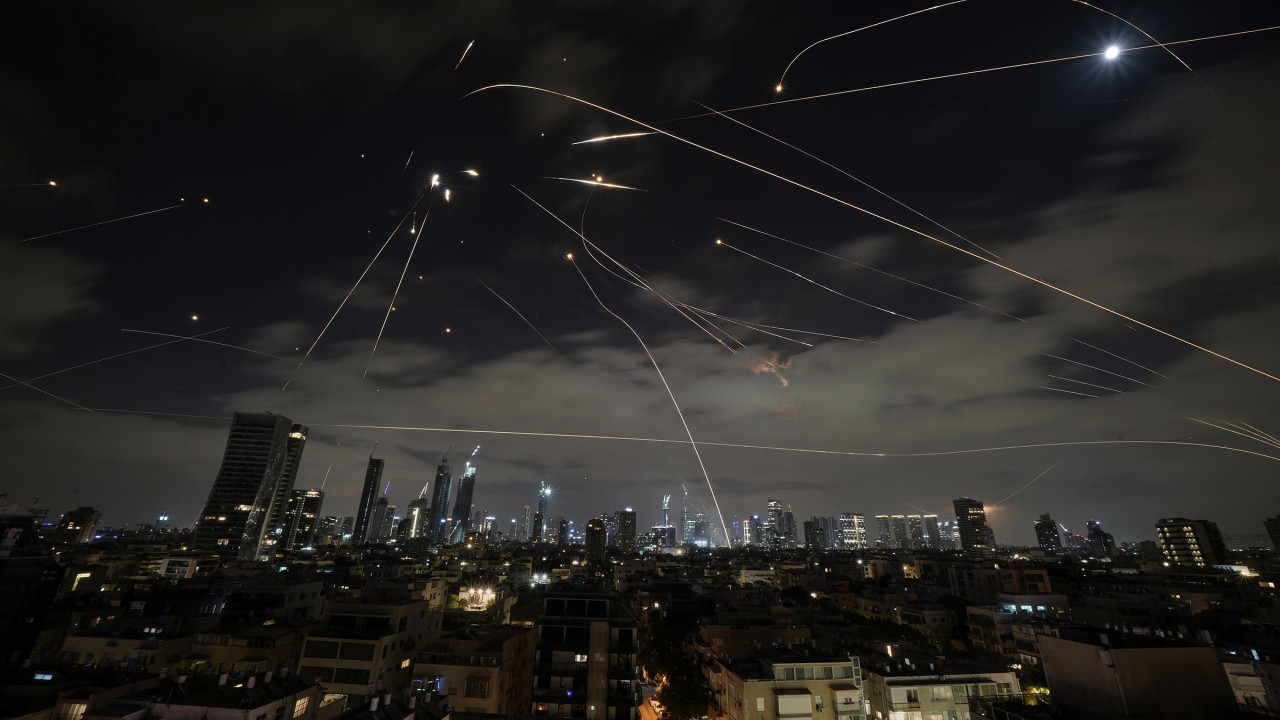
The contemporary security environment is characterized by unprecedented interconnectedness, where geopolitical conflicts, technological disruption, and systemic global risks converge with accelerating velocity. The February 2026 US-Israeli military engagement with Iran represents not an aberration but a harbinger of a new strategic reality—one in which traditional risk management paradigms prove dangerously inadequate. This article examines how security and risk management must fundamentally adapt to this transformed landscape, with particular focus on the protection of High-Net-Worth Individuals (HNWIs) and families. Drawing upon the immediate crisis in the Middle East as a case study, it analyzes the cascading effects of modern conflict across physical, digital, reputational, and jurisdictional domains. The article proposes an integrated protective framework that moves beyond reactive measures toward anticipatory resilience, incorporating geopolitical foresight, cybersecurity architecture, asset protection strategies, and adaptive governance structures. For HNWIs whose wealth and visibility render them uniquely vulnerable to the volatility of a multipolar world, the evolution from static protection to dynamic risk stewardship has become an existential imperative.
#Securityriskmanagement #HighNetWorthIndividuals #geopoliticalrisk #cybersecurity #assetprotection #MiddleEastconflict
1. Introduction: The New Geography of Risk
On the morning of 28 February 2026, the strategic calculus of the Middle East—and by extension, the global order—fundamentally transformed. US and Israeli forces launched large-scale strikes across Iran, resulting in the death of Ayatollah Ali Khamenei and other senior leadership figures. Within hours, Iranian retaliatory strikes targeted US bases and American allies across the region, drawing Gulf states including Kuwait, Qatar, the UAE, Saudi Arabia, and Oman into the conflict's expanding orbit . By early March, the confrontation had spread to fifteen countries, with a US submarine engaging an Iranian warship off Sri Lanka and UAVs exploding at an airport in Azerbaijan .
This escalation epitomizes the contemporary security challenge facing nations, corporations, and individuals alike: conflicts no longer respect geographic boundaries, and their secondary and tertiary effects ripple through interconnected systems with terrifying speed. For High-Net-Worth Individuals (HNWIs) and their families—whose assets, mobility, and visibility place them at the intersection of multiple risk vectors—this new environment demands a fundamental reconceptualization of security and risk management.
The thesis of this article is straightforward yet profound: traditional risk management, with its emphasis on static defenses and reactive postures, has been rendered obsolete by the velocity and complexity of contemporary global change. What is required instead is an adaptive, anticipatory, and integrated approach that recognizes the deep entanglement of physical security, cybersecurity, geopolitical intelligence, asset protection, and reputational management. Drawing upon the ongoing Iran crisis as a case study, this article examines how security professionals must evolve their practice and proposes a comprehensive framework for protecting HNWIs in an era of permanent volatility.
The analysis proceeds in five parts. First, it examines the transformed global risk landscape, tracing the intersection of geopolitical conflict, technological disruption, and systemic fragility. Second, it analyzes the specific vulnerabilities of HNWIs within this environment. Third, it proposes an integrated protective framework encompassing physical security, cyber resilience, asset protection, and governance structures. Fourth, it applies this framework to the Iran crisis as a stress test of contemporary risk management. Finally, it concludes with implications for the future of the profession and the imperative of anticipatory resilience.
2. The Transformed Global Risk Landscape
2.1 The Return of Great Power Conflict
For three decades following the Cold War, security professionals operated within a unipolar or transitional multipolar environment where the risk of major interstate conflict appeared contained. That era has conclusively ended. The February 2026 US-Israeli strikes on Iran represent not merely another Middle Eastern confrontation but a watershed moment in the return of great power military action as a tool of statecraft.
The rationales articulated by US officials reveal the complexity of contemporary conflict. President Trump cited nuclear proliferation prevention; Secretary of State Marco Rubio invoked imminent threat doctrine; Defense Secretary Pete Hegseth adopted maximalist language suggesting regime elimination . This multiplicity of justifications—shifting from preemptive defense to what Ali Vaez of the International Crisis Group identifies as potential regime change objectives—creates profound uncertainty for risk assessment . When the strategic objectives of major powers remain opaque and evolve during conflict, predicting escalation pathways becomes exceptionally difficult.
Marko Milanovic, Professor of Public International Law at the University of Reading, notes the contested legal basis for such action, observing that the self-defense justification under Article 51 of the UN Charter requires evidence of imminent attack for which there is "simply no evidence" regarding Iranian nuclear capabilities . This legal ambiguity carries practical consequences: when the distinction between lawful self-defense and aggressive war blurs, the norms protecting civilian assets and non-combatants weaken correspondingly.
2.2 The Entanglement of Conflict Domains
Contemporary conflict defies traditional categorization. As Wilfred Wan observes in the Global Catastrophic Risks Report 2026, "the deepening entanglement of nuclear and non-nuclear capabilities across domains, such as cyber and outer space, blurs thresholds and increases the risk that misperception or technical failure could trigger unintended—even nuclear—escalation" . This domain entanglement manifests clearly in the Iran crisis.
The conflict has not remained confined to the Middle East. A US submarine engaged an Iranian warship off Sri Lanka—hundreds of miles from the primary theater . UAVs struck an airport in Azerbaijan. The Houthis declared readiness for escalation while Hezbollah launched military responses following Khamenei's killing . Cyber operations almost certainly accompany kinetic actions, though attribution remains deliberately opaque. For HNWIs with global assets and operations, this geographic sprawl means that "regional conflict" is a misnomer; all significant confrontations now carry global dimensions.
2.3 Systemic Interconnections and Cascading Effects
The Global Challenges Foundation's analysis emphasizes that "global risks are becoming increasingly interconnected, accelerating and reinforcing one another across environmental, technological and security domains" . The Iran crisis illustrates this interconnection with disturbing clarity.
The Strait of Hormuz, through which 20% of global oil passes, has become a conflict zone. As Naveen Das of Kpler warns, prolonged disruption threatens not merely energy prices but "food stocks in the Middle East" . Fertilizers, strategic goods, and supply chains across multiple sectors face interruption. Insurance premiums for maritime transport through the region have "shot up quickly" . The conflict's economic effects propagate through global markets, affecting investment values, business operations, and ultimately the wealth portfolios of HNWIs regardless of their geographic location or direct exposure to the Middle East.
Marion Messmer of Chatham House identifies a deeper systemic effect: the conflict "sends to countries around the world the message that negotiations can quickly be replaced by force," potentially making states "reluctant to trust diplomatic efforts or the goodwill of major powers" . This erosion of trust in international institutions and diplomatic processes—what the Global Challenges Foundation terms "outdated governance, rising geopolitical tensions and fragmented institutions" —creates a more volatile environment where conflict becomes more likely and containment less assured.
2.4 The Acceleration of Technological Disruption
Technological change compounds geopolitical volatility. Denise Garcia notes that "diplomatic and regulatory processes remain too slow and fragmented to match the speed of technological change, such as the rapid integration of AI into military command and control" . Once embedded, these technologies prove "extremely difficult to constrain, leaving the world to play catch-up with risks that evolve faster than the rules meant to contain them."
For HNWIs, this technological acceleration manifests in multiple threat vectors. AI-enabled deepfakes and voice cloning have moved from theoretical concerns to operational tools for criminals seeking to bypass security protocols . Ransomware attacks can "completely shut down your personal and business operations" . The integration of AI into surveillance systems means that privacy erosion accelerates even as protective technologies evolve. The same technological tools that enable advanced security also empower those seeking to penetrate it.
2.5 Governance Fragmentation and Institutional Failure
The international institutions designed to manage global risks are manifestly failing. Canadian Prime Minister Mark Carney observed that events in Iran demonstrate "a failure of the global order" . The UN Security Council remains paralyzed by veto structures that reflect 1945 rather than 2026. International legal mechanisms lack enforcement capacity. The Global Challenges Foundation warns that "the rules written for a stable world no longer fit the one taking shape before us" .
This governance vacuum carries direct implications for HNWIs. When international law cannot constrain state action, assets become more vulnerable to seizure. When multilateral institutions cannot mediate conflict, geographic diversification offers less protection. When diplomatic norms erode, the rules-based order that has protected global commerce and investment for decades weakens. As the Kobre & Kim analysis notes, governments worldwide have shown "increasing willingness to go after assets they suspect to be acquired via fraud or misconduct—especially against UHNWIs from jurisdictions they view unfavorably" . In a fragmented governance environment, this willingness may expand to encompass broader categories of asset seizure justified by national security or emergency powers.
3. HNWI Vulnerabilities in the Contemporary Environment
3.1 The Targeting Logic: Why Wealth Concentrates Risk
High-Net-Worth Individuals face elevated risk not despite their resources but because of them. As Carson Wealth's analysis explains, "financial cyberattacks are increasingly sophisticated, using more and more advanced tactics. To warrant the resources necessary to carry out these attacks, criminals tend to focus on profitable targets, making those with substantial wealth and assets more likely to be targeted" .
This targeting logic operates across threat categories. For cybercriminals, HNWIs offer higher potential returns. For kidnap-for-ransom operatives, they represent more lucrative opportunities. For state actors seeking leverage or assets, they provide concentrated targets. For activists seeking visibility, they offer attention-amplifying platforms. The very characteristics that enable wealth accumulation—visibility, influence, complex operations, multiple properties, international mobility—create corresponding vulnerabilities.
3.2 Visibility as Vulnerability
HNWIs are "more searchable online, especially if they own a company, hold an executive position, make large donations to charity, or are public figures" . Criminals can exploit "public records and social media to find detailed information about their investments, property ownership, other assets, family members, and associates." This information asymmetry—where potential adversaries can research targets extensively while targets remain unaware of surveillance—creates significant security gaps.
The visibility problem extends beyond the primary individual to family members, household staff, business associates, and professional advisors. Each relationship creates additional attack surfaces. Each publicly available detail—a vacation photo revealing security routines, a charitable donation revealing financial capacity, a social media post revealing location—provides intelligence that adversaries can aggregate and exploit.
3.3 The Blurring of Personal and Corporate Risk
For entrepreneur-HNWIs and business-owning families, the distinction between personal and corporate risk has nearly dissolved. Cyberattacks on business systems compromise personal financial data. Kidnap threats against executives affect families. Reputational attacks on companies damage personal standing. Legal actions against businesses threaten personal assets.
This entanglement requires integrated rather than siloed risk management. Yet many HNWIs maintain separate security arrangements for personal protection, corporate operations, family offices, and philanthropic activities—creating coordination gaps that adversaries can exploit. The PGS Solution case study of executive travel protection illustrates the complexity: securing a business trip to high-risk regions requires coordination across personal security, corporate travel, local intelligence, and multiple jurisdictions .
3.4 Geographic Exposure and the Illusion of Safe Havens
HNWIs typically maintain multiple residences, travel frequently, and conduct business across borders. This geographic dispersion, traditionally viewed as risk mitigation through diversification, has become a source of vulnerability in an interconnected conflict environment.
The Iran crisis demonstrates that "safe" locations may not remain safe. Gulf states including Qatar, the UAE, and Saudi Arabia—perceived as relatively stable and insulated from direct conflict—found themselves targeted by Iranian retaliation . Oman, which had been mediating negotiations and maintaining neutral posture, was nevertheless struck . The conflict spread to Sri Lanka and Azerbaijan . No jurisdiction can guarantee immunity from the spillover effects of major power conflict.
Shane Ahern of Lockton notes that "in times of conflict, risk of damage or destruction increases significantly" for luxury properties, while insurers may "adjust premiums based on heightened risks" and "require detailed security protocols for high-value residences" . Geographic diversification, once a cornerstone of HNWI risk management, now requires constant reassessment as conflict dynamics evolve.
3.5 The Insider Threat
Not all threats originate externally. Carson Wealth notes that "some attacks are initiated by employees, business partners, advisors, and even family members" . Insider threats prove particularly dangerous because the actors possess legitimate credentials, detailed knowledge of systems and processes, and access that bypasses external security controls.
For HNWIs with complex operations involving multiple advisors, household staff, and family offices, insider threat management requires careful attention to access controls, monitoring, and the principle of sharing sensitive information "on a need-to-know basis" . Yet the trust-based relationships characteristic of HNWI advisory structures can create resistance to implementing the kind of controls that would mitigate insider risk.
3.6 Unique Vulnerabilities of HNWI Families
HNWI families face collective vulnerabilities that individuals alone might avoid. Children attending international schools become potential targeting vectors. Spouses with public profiles attract attention. Multi-generational wealth structures create complex governance challenges. Family offices that manage significant assets present concentrated targets.
The MKD Wealth analysis emphasizes extending cybersecurity protocols to "family members and assistants" and vetting "third-party professionals and vendors for their cybersecurity practices—especially those with access to financial or personal data" . Yet family dynamics—privacy concerns, resistance to oversight, varying security awareness across generations—complicate implementation of consistent protective measures.
4. An Integrated Framework for HNWI Protection
4.1 From Static Protection to Dynamic Risk Stewardship
The evolution required in HNWI security parallels that which the Global Challenges Foundation advocates for global governance: a shift "from crisis response to anticipatory stewardship, embedding foresight, early warning systems and risk reduction into decision-making" . Static protection—guards at gates, alarms on properties, encryption on devices—remains necessary but no longer sufficient. What is required is dynamic risk stewardship: continuous assessment of evolving threats, adaptive reconfiguration of protective measures, and integration of security into all aspects of wealth and family management.
This approach recognizes that security is not a discrete function to be delegated to professionals but an ongoing process requiring active engagement from HNWIs, their families, and their entire advisory ecosystem. It demands what the Sustainability Directory's analysis of security sector evolution terms "institutional courage to redefine mission success" —in this context, moving beyond the absence of incident toward proactive resilience building.
4.2 Geopolitical Intelligence and Foresight
Contemporary risk management must begin with geopolitical intelligence. HNWIs require not merely news summaries but analytical assessment of how global events may affect their specific assets, operations, and family members. This demands:
Structured analytical methods that move beyond linear prediction to scenario planning and alternative futures analysis. As the Global Challenges Foundation notes, "imagination is not an escape from reality but the engine for improved governance" . Security professionals must help HNWIs imagine how various conflict trajectories—escalation, containment, unintended consequences—might affect their specific circumstances.
Integration of open-source intelligence (OSINT) with privileged information from advisory networks. The PGS Solution case study demonstrates how "real-time updates, including intelligence on potential protest zones, airport vulnerabilities, and road security concerns" enabled adaptive protection during executive travel . This kind of dynamic intelligence requires continuous monitoring and analytical capacity beyond what most HNWIs maintain internally.
Understanding of second- and third-order effects. When the Strait of Hormuz closes, which portfolio companies face supply chain disruption? When Gulf states are drawn into conflict, which properties require evacuation planning? When cyber operations accompany kinetic action, which digital assets face elevated threat? Security professionals must help HNWIs trace causal chains through interconnected systems.
4.3 Cybersecurity Architecture for the Digital Age
Cybersecurity for HNWIs has moved beyond password management to comprehensive digital protection. The following elements are essential:
Multi-factor authentication (MFA) across "all software used for personal or corporate business" . This basic control prevents many common attacks, yet many HNWIs resist implementation due to convenience concerns.
Secure communication protocols for sensitive discussions. The PGS Solution case study notes provision of "encrypted communication devices to safeguard sensitive business discussions" . For families and advisors, establishing secure channels and protocols for their use is foundational.
Mobile number protection through "number locking (a.k.a. Port Freeze or SIM Lock)" to prevent SIM-swapping attacks that can compromise authentication and access .
Deepfake and voice cloning awareness, including establishment of "a family passphrase" to verify identity in high-stress situations where AI-generated impersonation might be attempted .
Incident response planning that identifies "who to contact in a crisis: your financial advisor, IT provider, attorney, and cyber insurance carrier" and ensures ability to "back up critical data regularly, and verify your ability to restore it" .
Professional assessment for HNWIs at elevated risk, potentially including "hiring a professional firm to conduct risk assessments, monitor threats, and help educate family members" .
4.4 Physical Security Evolution
Physical security for HNWIs must evolve in response to the contemporary threat environment:
Travel risk management has become a core requirement. The PGS Solution case study illustrates comprehensive approach: pre-trip threat assessment, route reconnaissance, secure transportation with armored vehicles and vetted drivers, 24/7 executive protection coverage, real-time intelligence monitoring, and coordination with local security providers . For HNWIs traveling to regions affected by the Iran conflict or similar volatility, this level of preparation is essential rather than optional.
Residential security must account for elevated threat environments. As Ahern notes, insurers may "require detailed security protocols for high-value residences" in response to conflict risks . Beyond insurer requirements, HNWIs should assess whether their properties can withstand targeted attacks, whether security personnel are adequately trained and equipped, and whether evacuation routes and protocols exist for crisis scenarios.
School and workplace security for family members requires coordination with institutions that may have different risk tolerances and security capabilities. HNWI families should engage with schools, universities, and employers to understand their security postures and ensure appropriate protection for family members.
Kidnap and ransom preparedness remains relevant despite its uncomfortable nature. Ahern observes that "kidnap and ransom insurance, a crucial risk mitigation component for affluent or high-profile individuals, will undoubtedly experience a paradigm shift" as "the increased likelihood of security threats necessitates enhanced security measures, comprehensive assessments, and updated requirements" . Proactive preparation—including insurance coverage, response protocols, and family member training—is essential before crisis occurs.
4.5 Asset Protection and Jurisdictional Strategy
The Kobre & Kim analysis of Chinese HNWI vulnerability articulates principles applicable to all wealthy individuals in a high-tension world: "a globally coordinated strategy can be deployed to lawfully protect an individual's legitimate rights and interests" through "assessing the vulnerabilities of an individual's global asset structures," "taking proactive steps to shore up defenses in the places that matter," and "proactively initiating parallel proceedings in friendlier jurisdictions" .
For HNWIs concerned about asset seizure in an era of great power conflict, this suggests several strategic principles:
Jurisdictional diversification that distributes assets across multiple legal systems, reducing exposure to any single state's seizure authority. However, diversification must be strategic rather than merely geographic, considering each jurisdiction's legal protections, political stability, and relationship to potential threatening states.
Structural protection through trusts, foundations, and other vehicles that separate legal ownership from beneficial enjoyment. The Kobre & Kim analysis recommends "exploring alternative trust planning options and asset ringfencing in key offshore jurisdictions such as the Cayman Islands, BVI, and elsewhere" .
Insurance review ensuring that policies adequately cover emerging risks. Ahern emphasizes the importance of reviewing "coverage limits" and understanding that standard policies typically exclude "acts of war" . For valuable collections—art, jewelry, wine, cars—specialized coverage with appropriate terms is essential.
Evacuation planning for physical assets. Ahern notes that insurers may offer "reduced rates for pieces kept in vaults or collections split between multiple residences" and suggests "exploring secure offsite locations, in case the need arises for emergency evacuation and storage" .
4.6 Reputational Risk Integration
Reputational risk intersects with all other risk categories. A cyberattack compromising personal data creates reputational damage. A kidnapping targeting family members generates publicity. Legal actions alleging misconduct affect standing. Security incidents at properties raise questions about judgment.
Conversely, reputational strength can provide protective benefits. HNWIs with strong community standing, positive media relationships, and credible philanthropic commitments may face reduced activist targeting and greater official protection in crisis.
Integrating reputational risk into security management requires:
Crisis communication planning that anticipates how various security incidents might be perceived and prepares messaging accordingly.
Media relationships that ensure accurate reporting when incidents occur, countering misinformation and speculation.
Digital footprint management that reduces publicly available information usable by adversaries while maintaining appropriate visibility for legitimate purposes.
Family governance that ensures all members understand how their actions affect collective reputation and security.
4.7 Governance and Professional Advisory Coordination
The complexity of contemporary risk management exceeds what any single advisor can provide. HNWIs require coordinated teams spanning security professionals, legal counsel, financial advisors, insurance brokers, and family office executives. Yet coordination across these specialized domains rarely occurs naturally.
Effective governance structures should include:
Regular risk review meetings bringing together all advisors to assess evolving threats and coordinate responses. These should occur at least quarterly, with additional sessions triggered by significant geopolitical events.
Clear role definition establishing who is responsible for each aspect of risk management, with identified backups and escalation protocols.
Information sharing protocols ensuring that relevant intelligence reaches all advisors while maintaining appropriate confidentiality.
Family engagement that educates all members about risks and their roles in mitigation, reducing the "weakest link" vulnerability .
Regular testing of incident response plans through tabletop exercises and simulated crises.
4.8 Insurance as Risk Transfer
Insurance cannot replace security, but it provides essential risk transfer for residual exposures. The contemporary environment demands careful attention to insurance structures:
Cyber insurance covering not merely data breaches but ransomware, business interruption, and reputational harm. Policies should be reviewed for coverage adequacy and exclusion clarity.
Kidnap and ransom insurance providing not merely financial payment but access to specialized response consultants. Ahern emphasizes securing such coverage "proactively, as the terms and conditions sought may not be available once a conflict has begun" .
Property and casualty insurance with adequate limits and understanding of war exclusions. Luxury properties require specialized coverage reflecting their unique characteristics and values.
Travel insurance including "evacuation coverage" ensuring "everyone is swiftly and safely transported to a secure location" in crisis, and "medical transportation, including air ambulances or medically equipped flights" for health emergencies .
Fine art and collection insurance with appropriate valuation, security requirements, and evacuation provisions.
5. Case Study in Application: The Iran Crisis as Stress Test
5.1 The Crisis Unfolds
The February-March 2026 Iran crisis provides a real-world stress test for the integrated framework proposed above. Consider how a hypothetical HNWI family with regional exposure might apply these principles as events unfold.
Pre-crisis phase: In the months before escalation, geopolitical intelligence would have identified rising US-Israel-Iran tensions, triggering enhanced monitoring and contingency planning. Family offices would have reviewed asset structures, ensuring jurisdictional diversification and trust protections. Security teams would have assessed residential properties in the region, evaluating evacuation routes and protocols. Insurance policies would have been reviewed for coverage adequacy and war exclusion understanding.
Crisis trigger: When US-Israeli strikes occurred on February 28, families with effective risk management would have activated pre-planned responses. Regional family members would have received immediate guidance on movement restrictions, communication protocols, and evacuation procedures. Security teams would have implemented enhanced protective measures. Legal advisors would have reviewed asset exposure to potential retaliatory actions.
Crisis escalation: As Iranian retaliation spread to Gulf states and beyond, families with diversified geographic exposure would have faced complex decisions about which locations required evacuation, which assets required protection, and which business operations required suspension. Real-time intelligence would have informed these decisions, distinguishing areas of actual threat from those experiencing merely symbolic strikes.
Crisis aftermath: As conflict continues with unpredictable trajectory, families with effective risk governance would maintain enhanced monitoring while gradually restoring normal operations in cleared areas. Post-incident review would identify lessons for future preparedness.
5.2 Vulnerability Exposure
The crisis exposed specific HNWI vulnerabilities:
Geographic assumptions proved unreliable. Gulf states assumed to be relatively insulated from direct conflict found themselves targeted. Neutrality provided no protection, as Oman's experience demonstrated .
Asset concentration in affected regions created immediate exposure. Properties, investments, and business operations in the Middle East faced disruption, damage, or destruction risks.
Travel disruption affected family members and executives caught in affected areas or unable to transit through closed airspace and ports.
Economic cascades affected portfolio values globally through oil price spikes, supply chain disruption, and investor uncertainty .
Reputational exposure arose for families with visible regional investments or operations, potentially attracting negative attention regardless of their actual positions on the conflict.
5.3 Framework Performance
The integrated framework proposed above would have mitigated but not eliminated these vulnerabilities. Geopolitical intelligence would have provided earlier warning, enabling proactive rather than reactive response. Jurisdictional diversification would have limited exposure to any single affected region. Insurance coverage would have transferred some financial risks. Crisis communication planning would have managed reputational dimensions.
Yet the crisis also revealed framework limitations. The speed of escalation—from strike to regional spread within hours—exceeded many response capabilities. The geographic sprawl—affecting fifteen countries within days—challenged even well-resourced security teams. The uncertainty about trajectory—regime change? prolonged conflict? broader war?—complicated decision-making. No framework can eliminate all risk; the goal is resilience rather than invulnerability.
6. Conclusion: The Imperative of Anticipatory Resilience
The February 2026 Iran crisis represents not an isolated event but a template for the security environment of coming decades. Great power conflict has returned. Geographic boundaries no longer contain violence. Cyber and kinetic operations intertwine. Economic cascades propagate through interconnected systems. International institutions prove inadequate to the challenges they were designed to address.
For High-Net-Worth Individuals and their families, this environment demands fundamental evolution in security and risk management. The static protection models of the past—guards, gates, alarms—remain necessary but are no longer sufficient. What is required instead is anticipatory resilience: continuous assessment of evolving threats, adaptive reconfiguration of protective measures, integration of security across all domains of wealth and family management, and governance structures that ensure coordination among specialized advisors.
This evolution parallels the transformation that the Global Challenges Foundation advocates for global governance: moving "from fragmentation to connection and adaptability," "from erosion to legitimacy," and "from imbalance to inclusion" . At both macro and micro levels, the challenge is identical: building systems capable of managing risks that are increasingly interconnected, accelerating, and resistant to traditional control mechanisms.
The implications for security professionals are profound. Technical competence in protective operations remains essential but must be supplemented by geopolitical literacy, technological awareness, strategic foresight, and advisory capabilities. Security can no longer be a discrete function delegated to specialists; it must become an integrated dimension of wealth management, family governance, and strategic planning.
For HNWIs themselves, the imperative is engagement. Security cannot be purchased and forgotten; it requires ongoing attention, family involvement, and integration with all aspects of life and wealth. The families that thrive in the coming decades will be those that treat security not as a burden but as an essential dimension of responsible wealth stewardship—protecting not merely assets but the ability to pursue purpose, opportunity, and legacy in a volatile world.
As the Global Challenges Foundation concludes, "The challenges ahead are significant. However, they also offer an opportunity to rethink how we cooperate on a shared planet and to reimagine a global governance system fit for the risks and realities of our time and those still to come" . For HNWIs and their advisors, the parallel opportunity is to reimagine security and risk management—moving beyond protection toward resilience, beyond reaction toward anticipation, and beyond fragmentation toward integration. In an era of permanent volatility, that evolution is not merely prudent; it is imperative.
References
1. Mineur, E., Möller-Loswick, A., & Olin-Pape, A. (2026). Conclusion - Reflections from GCF. Global Catastrophic Risks Report 2026. Global Challenges Foundation.
2. Kobre & Kim. (2026). How Chinese Ultra-High-Net-Worth Individuals Can Protect Their Global Wealth from Seizure in a High-Tension World. Kobre & Kim International Private Client Team.
3. European Union Institute for Security Studies. (2026, March 1). War in the Middle East: What implications for the EU and the world? EUISS Commentary.
4. MKD Wealth. (2025). Advanced Cybersecurity Strategies for High Net Worth Families and Entrepreneurs. MKD Wealth Management.
5. Hartig, C. (2025). Integrating Disaster Risk Reduction with Security Risk Mitigation in Conflict Settings - A Case Study. Lund University Publications.
6. PGS Solution. (2025). Ensuring Secure Business Travel for a High-Net-Worth Individual (HNWI). LinkedIn.
7. Voice of Vietnam. (2026, March 5). Middle East conflict: major questions remain unanswered. VOV World.
8. Carson Wealth. (2025). Financial Cybersecurity: How to Protect Your Digital Wealth. Carson Wealth Management.
9. Sustainability Directory. (2025). Security Sector Climate Integration. Term → Sustainability Directory.
10. Insurance Business America. (2024). Risk management for the affluent in today's environment. Insurance Business Magazine.
11. Ahern, S. (2024). Risk management for the affluent: Interview. Lockton Private Risk Group.
12. Bury, P. (2026). Commentary on UK response to Iran conflict. University of Bath.
13. Das, N. (2026). Analysis of Strait of Hormuz disruption. Kpler.
14. Garcia, D. (2026). Technology and governance in the security domain. Global Catastrophic Risks Report.
15. Messmer, M. (2026). International security implications of Iran conflict. Chatham House.
16. Milanovic, M. (2026). International law and the use of force against Iran. University of Reading School of Law.
17. Vaez, A. (2026). Iran project analysis. International Crisis Group.
18. Wan, W. (2026). Nuclear and non-nuclear entanglement. Global Catastrophic Risks Report.
19. Szombatfalvy, L. (2026). Cited in Global Catastrophic Risks Report. Global Challenges Foundation.
20. Everts, S. (2026). What should Europe do now that the US and Israel are redrawing the map of the Middle East? EUISS.
Leave a Comment
Comments
No comments yet. Be the first to share your thoughts.